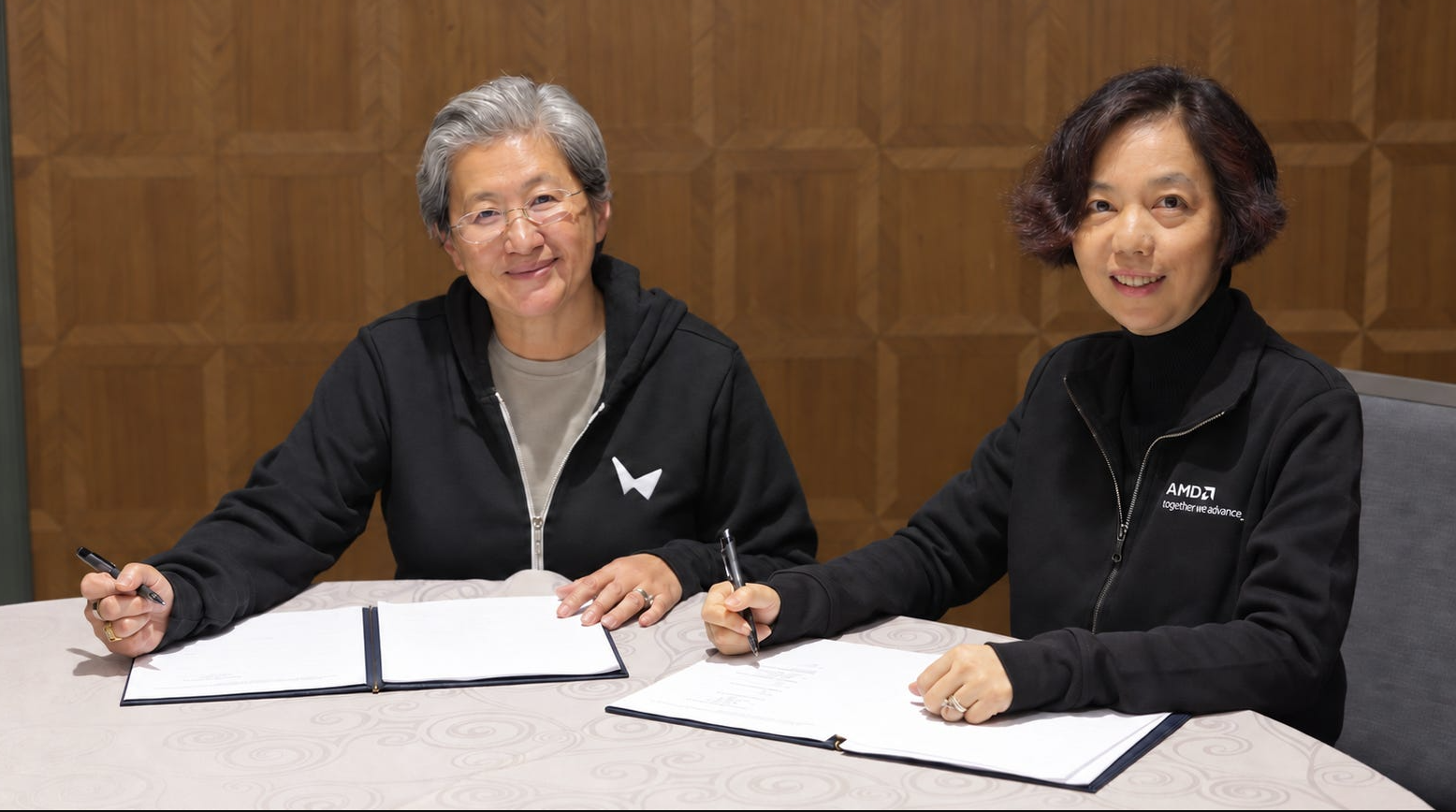
This week, AMD announced its $8.2 billion acquisition of Radical Ventures portfolio company World Labs. When we first introduced the world to World Labs in September of 2024, we shared our deeply held belief that spatial intelligence – AI that can model, reason, and interact within the 3D physical world – represented the next frontier of artificial intelligence. In two years, World Labs’ rapid technological advancements repeatedly illustrated the prescience of that conviction.
We are proud to have partnered with World Labs since before day one. AI pioneer Fei-Fei Li founded World Labs alongside her co-founders Justin Johnson and Ben Mildenhall, along with an extraordinary team. But our long-term relationship with Fei-Fei dates back to her previous startup journey, a bond that deepened when she joined Radical Ventures as a Scientific Partner in early 2023.
Fei-Fei and I began discussing her vision for a spatial intelligence company years before World Labs was formed. We scheduled at least weekly meetings to incubate the concept starting a year before incorporation — before even the co-founders had joined. Through that period, we witnessed Fei-Fei’s clear vision about what to build and how, in order to create a future that didn’t yet exist. While academics are sometimes painted with a derisive brush as incapable of building startups, we were in the room as Fei-Fei created the vision, assembled the team and executed brilliantly at every step of the World Labs journey.
Building a generational AI company requires exceptional speed and the right structural support. From day one, Radical’s Velocity team supported the World Labs team across every critical pillar of the business — from recruiting AI talent to securing vital compute resources to orchestrating public affairs.
In two years, the company grew to about 70 people, launched Marble, acquired robotics simulation startup SceniX in July and, earlier this month, released Atlas, its next-generation world model. AMD has partnered with World Labs since its earliest days and was an early investor. Fei-Fei sees the combination as a chance to “accelerate the flywheel between software and hardware development.” For AMD, World Labs’ research will help shape what its chips need to do years from now.
The acquisition of World Labs will be the second-largest acquisition in AMD’s history. It’s also the largest ever transaction between a buyer and seller both led by female CEOs.
Fei-Fei Li will join AMD as Executive Vice President and Chief Scientist, reporting directly to CEO Lisa Su. As Fei-Fei noted in her announcement, scaling technical progress requires getting intimately close to the hardware. Uniting World Labs’ pioneering foundation models with AMD’s massive hardware ecosystem under Dr. Su’s leadership is a perfect match. It bridges the digital and physical worlds, ensuring these models have the scale and efficiency required to solve humanity’s most fundamental challenges.
Congratulations to Fei-Fei, Ben, Justin, Mala and the entire World Labs team on this extraordinary new chapter. We are thrilled to see what you build next.
Read Fei-Fei’s post on World Labs joining AMD.
AI News This Week
- Trump Defends Light-Touch AI Strategy After Industry Sounds Alarms (WSJ) — Roughly two dozen of the tech industry’s most prominent CEOs gathered for lunch at the White House, among them Nvidia’s Jensen Huang, Google’s Sundar Pichai, Meta’s Mark Zuckerberg, Elon Musk, and Anthropic’s Dario Amodei. The group signed a voluntary pledge to monitor model development internally, submit models to external review, and report safety efforts to their boards. President Trump called the document “morally binding” and said the administration may form a committee to oversee it. The pledge anchors the White House’s self-regulation approach.
- AI Data Centers in Space? Google Kicks off the Race with a Key Test (CNN) — AI computing may eventually move into orbit, with Google launching the first test satellite for Project Suncatcher, its initiative to build data centers in space. The prototype will test how Google’s TPU chips withstand launch forces and space radiation after ground simulations showed promising results. Two more satellites planned for 2027 will run continuously and may test laser links that let satellites share data with each other. Google is testing radiators and heat pipes to cool chips in space.
- Don’t Be Fooled, LLMs Don’t Reason (MIT Technology Review) — Trustworthy AI for science may require pairing machine intuition with explicit deliberation, argues AlphaGo team member Thore Graepel. AlphaGo beat Go champion Lee Sedol in 2016 with help from Move 37, a play so unconventional that some commentators thought it was a glitch. AlphaGo’s neural network rated the move a long shot, and its search system chose it after weighing thousands of possible futures. Today’s language models lean heavily on intuition, since even their chain-of-thought reasoning comes from the same next-token prediction process. Graepel proposes building systems that keep an auditable record of their hypotheses and revise beliefs only on evidence, which he sees as essential for fields like drug discovery.
- Google Releases new Gemini Model with Guardrails amid A.I. Safety Debate (NYT) — Cybersecurity firms will get first access to Google’s new flagship model, Gemini 4 Argon, which gives them time to patch vulnerabilities the model uncovers before a wider release. Gemini 4 Argon includes new monitoring guardrails that can detect when the model goes beyond what a user intended while completing a task and halt its activity. Google says the model sets a record in real-world software engineering and leads a benchmark covering finance, legal and other professional tasks.
- Research: Nature is our Learning Environment (Periodic Labs) — AI systems that learn directly from physical experiments could shorten the slow trial-and-error cycle of materials discovery. Radical Ventures portfolio company Periodic Labs trained Periodic Neon, a 1-trillion-parameter model built on the open-weight Kimi K2.6, using reinforcement learning on data from its own autonomous labs. In an early test, scientists used X-ray diffraction analysis to confirm what materials an experiment produced. On the hardest of these analyses, Neon’s success rate rose twentyfold to 55.3%, beating GPT-6 Astra and Claude Fable 5.1 at lower cost. Neon held its lead on chemical systems left out of its training, and its performance keeps climbing as Periodic adds more lab data and compute. Every experiment Periodic runs adds to proprietary training data that general-purpose models lack, and Neon now analyzes results in the company’s search for better superconductors and magnets.
2026 AI Founders Masterclass
Applications for the 2026 AI Founders Masterclass and Compute Cohort close soon. Our annual four-week virtual program for AI researchers and technical entrepreneurs kicks off October 7 and runs through October 29. This year’s speakers include luminaries Yann LeCun (AMI Labs), Aidan Gomez (Cohere), and Anna Goldie (Ricursive Intelligence), among others. The program is built for researchers, students, and technical founders ready to launch a startup, with the chance to hear directly from those who have done it before.
Participants can also apply to our selective Compute Cohort, which gives accepted founders up to $350,000 in compute credits, complementary legal support, mentorship from our team, and more. Spots are limited, and the window is closing fast. Masterclass applications are due October 5, and Compute Cohort applications are due October 9. Apply now at https://radical.vc/masterclass/