As AI infrastructure scales, the conversation around energy has centred on the lack of power to support the buildout. But what if AI data centers could give power back to the grid when it’s needed most? Dr. Varun Sivaram, founder and CEO of Radical Ventures portfolio company Emerald AI, shares what a recent UK trial with National Grid, EPRI, Nebius, and NVIDIA revealed about the future of AI and energy.
AI workloads are energy-intensive, and grid infrastructure expands on timelines measured in years. In the UK alone, the demand connections queue has tripled in the past year, from 41 GW to 125 GW. Data centers represent a significant share of that increase. Building the transmission lines, substations, and generation capacity to meet this demand involves long planning approvals, specialist supply chains, and community engagement. The AI sector, meanwhile, moves at the speed of software, with capital and hardware ready to deploy now.
Most grid planning still treats large industrial loads as fixed. A data center draws X megawatts, and the grid must be built to deliver X megawatts at all times, including the worst-case hour of the worst-case day. That assumption made sense for factories and smelters whose physical processes cannot be interrupted. GPU clusters are different. Some training, fine tuning, and batch inference jobs can be slowed or paused, while other jobs can be moved across the country at the speed of light to relieve local grid constraints.
Within any AI data center, workloads vary widely in their tolerance for interruption. Latency-sensitive inference serving needs to run continuously but can often be shifted geographically without any meaningful latency hit. Training runs, fine-tuning jobs, and batch inference all have natural flex points or can be slowed down. Checkpoint intervals, gradient accumulation windows, and parallelism strategies can absorb short slowdowns. GPU power caps can reduce instantaneous consumption at the device level. Schedulers can shift lower-priority work to off-peak hours. In some cases, workloads can be redirected geographically to regions where the grid is less constrained. What has been missing is the software layer to orchestrate all of this in coordination with the grid.
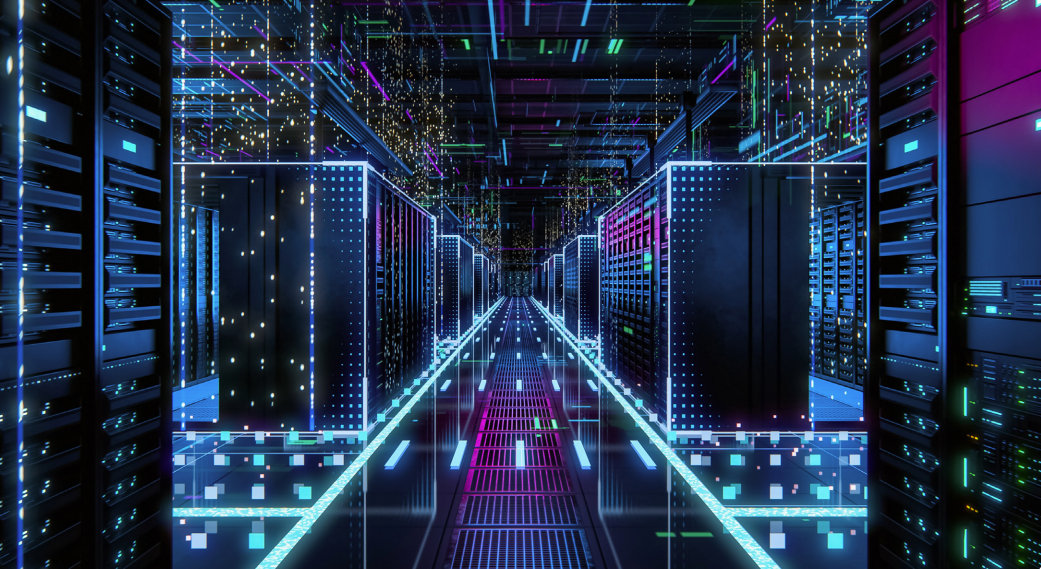
We recently put this to the test with National Grid, EPRI, Nebius, and NVIDIA at a London AI data center running 96 NVIDIA Blackwell Ultra GPUs. Over five days, the cluster responded to 22 live dispatch events from the grid, including surprise signals with zero advance notice. The system adjusted power consumption to every requested target, with reductions of up to 40%, while the AI workloads running on the cluster continued without disruption to their service levels.
One test replicated the UK’s famous “TV pickup” phenomenon, where millions of people switch on kettles during halftime of a football match, creating a sudden spike in national electricity demand. The AI cluster autonomously ramped its power down in inverse correlation to the spike, acting as a counterweight on the grid. Another simulated a lightning-strike emergency, the kind of rapid generation loss that would cause a major blackout. The cluster shed 30% of its load in under 40 seconds, a response speed comparable to industrial battery storage.
These tests were designed to build an evidence base for a different operating model. If data centers can demonstrate reliable, measurable flexibility, grid operators can offer them faster connections using existing headroom rather than waiting for new infrastructure to be built. Flexible data centers could also participate in energy markets, earning revenue for reducing load during peak periods and lowering the cost of grid upgrades that would otherwise be passed on to consumers.
We have announced Aurora, a nearly 100-MW, power-flexible AI facility in Virginia, planned for 2026, designed to apply these same principles at scale. Emerald AI is working to integrate power flexibility into NVIDIA’s reference design for gigascale AI data centers, so that this capability becomes a standard feature rather than a bespoke add-on.
The same properties that make AI workloads energy-intensive also make them uniquely suited to flex with the grid. The question is whether policy and grid planning can evolve fast enough to take advantage of this technology. If regulation catches up, data centers become something the grid has never had at this scale: large, fast, software-controllable demand that can ramp down in seconds and hold for hours. Ultimately, by aligning computational demand with electrical supply, AI can transform from a burden on the utility sector into the digital backbone of a modern, flexible grid.
For more information on Emerald’s London demonstration and their technology, read their whitepaper on the results from the project.
AI News This Week
-
The World's Most Innovative Companies of 2026 (Fast Company)
Fast Company’s annual list of the World’s Most Innovative Companies recognized five Radical Ventures portfolio companies this year. Crusoe has developed a vertically integrated platform that constructs AI data centers and offers AI cloud services. Writer is an enterprise AI agent platform that enables non-technical business teams to automate complex knowledge work using proprietary LLMs trained to produce on-brand output. Cohere develops enterprise-grade large language models and an agentic platform enabling customizable, privacy-first AI, including for regulated industries and large enterprises. World Labs, founded by AI pioneer Fei-Fei Li, is building world models that can perceive and reason with high fidelity in 3D space. Ribbon is a voice AI recruiting agent that conducts natural, adaptive interviews at scale, cutting time-to-hire from days to minutes. Radical also has unannounced investments in additional companies on this year’s list, with more news to come.
-
Cohere Launches an Open Source SOTA Model Voice Transcription Model (TechCrunch)
Radical Ventures portfolio company Cohere released Transcribe, its first voice model, an open-source speech recognition system for note-taking and speech analysis. At 2 billion parameters, the model runs on consumer-grade GPUs and supports 14 languages. Transcribe tops the Hugging Face Open ASR leaderboard. It processes 525 minutes of audio per minute and will be integrated into Cohere’s enterprise agent platform, North, while remaining free through its API.
-
Why Do Humanoid Robots Still Struggle With the Small Stuff? (Quanta)
Three breakthroughs have driven humanoid robotics from stumbling demos to fluid, autonomous movement. Deep reinforcement learning enables robots to learn from simulations, proprioceptive electric actuators that give robots animal-like compliance, and vision-language-action (VLA) models that let robots plan and execute multi-step physical tasks from natural language without hard-coding. Together, these advances produced systems that can sort irregular objects and move with gymnastic fluidity. But humanoid robots still lack force control, which is the ability to sense and regulate the pressure applied when touching the world. Researchers are pursuing fixes ranging from training compliant behaviours in simulation and improving tactile sensors to scrapping VLA architectures entirely in favour of approaches that treat physics as learnable from the ground up.
-
More! More! More! Tech Workers Max Out Their A.I. Use. (NYT)
A status competition is emerging inside top tech companies, with engineers competing on internal leaderboards to show how many AI tokens they consume. Agentic coding tools, which can run unsupervised and spawn parallel subagents around the clock, have made billion-token weeks achievable for individual users. Some companies now factor AI use into performance reviews, and generous token budgets are becoming a standard job perk.
-
Research: Universally Converging Representations of Matter Across Scientific Foundation Models (MIT)
Researchers at MIT analyzed 59 scientific AI models spanning chemistry, materials science, and protein biology, finding that despite differences in architecture, training data, and input format, these models converge toward shared internal representations of physical reality. As model performance improves, their latent spaces grow increasingly similar, suggesting AI is learning a common underlying structure of matter rather than idiosyncratic task-specific patterns.
Radical Reads is edited by Ebin Tomy (Analyst, Radical Ventures)