In this week’s Radical Reads, Jonny Dyer, CEO of Radical Ventures portfolio company Muon Space, frames the economic opportunity presented by more predictable access to space. He expands on these ideas in a long-form feature on his blog, where he examines the technical and economic shifts reshaping the industry.
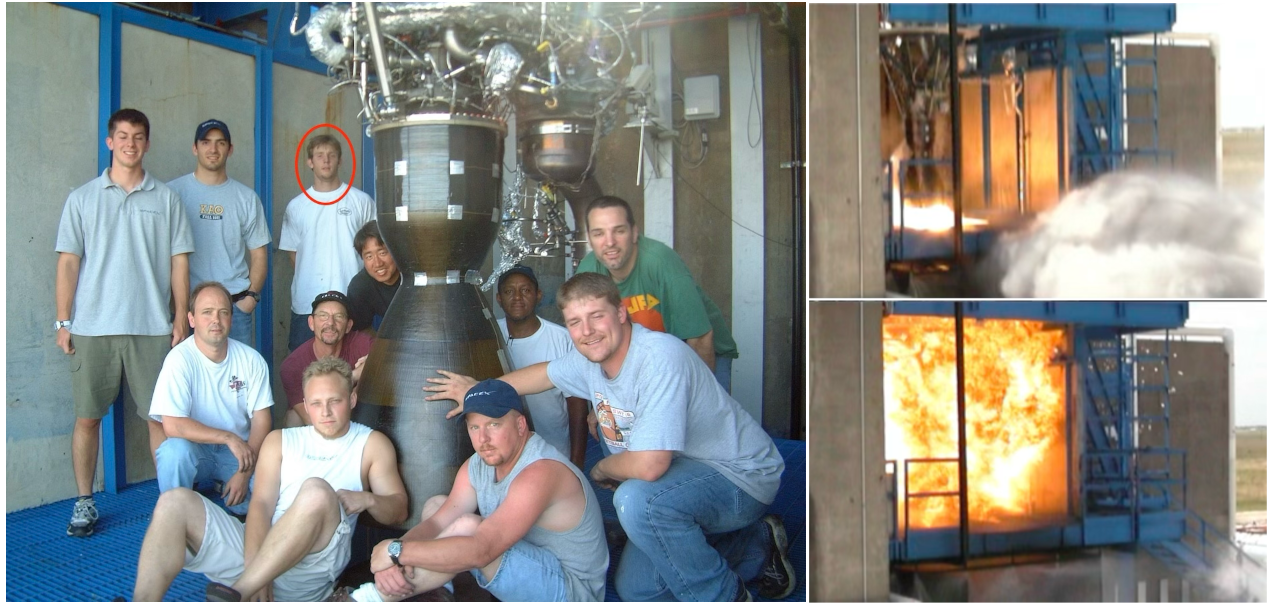
In the summer of 2004, I stood in a poorly lit blockhouse buried in the central Texas grassland, helping assemble the first integrated rocket engine for a sci-fi startup that almost everyone assumed would fail.
Two days later, that engine tore itself apart in a ball of flames, along with most of the test stand. My job for the rest of the summer was to lie upside down in the scalding central-Texas sun and rewire it.
That startup was SpaceX. Twenty years later, it didn’t just survive, it has reshaped access to space and quietly set the conditions for what may become the most consequential IPO in history.
The catalyst for a massive rumored $1.5T SpaceX valuation at IPO is a provocative idea: orbital data centers (ODCs) – large-scale computing infrastructure deployed in space to support AI, connectivity, and data processing. The concept has captured investor imagination and fueled headlines about the next trillion-dollar market.
But as flashy and headline-gripping as they are, orbital data centers are not the real story.
Instead the whole idea of ODCs is an outcome – an important marker of a deeper transformation that SpaceX itself helped unlock.
If SpaceX does go public this year, its valuation won’t just be about rockets or even Starlink. It will be about something much more fundamental: the idea that space is becoming a core layer of global information technology and infrastructure rather than its historical role as a niche domain for just governments and the defence-industrial base.
This idea would have sounded absurd 20 years ago when I started in this industry.
In the 2010’s, at the dawn of commercial space, everything was fragile. Launch opportunities were scarce. Hardware was gold-plated or unreliable. Software was an afterthought. Entire businesses could hinge on a single supplier or a single unreliable launch vehicle.
It was in that context in 2013 that I found myself next door to the world’s largest asbestos mine in southern Russia, integrating our first satellite on the top of a Dnepr rocket – a converted Soviet SS-18 ICBM. Our company, Skybox Imaging, was the first VC-backed satellite startup, and we desperately hoped to get SkySat-1 into space before we ran out of money. Despite SpaceX’s recent success in launching the first few Falcon 9s, for a company like ours, getting a ride to space was no easier in 2013 than it had been in my days in the SpaceX blockhouse a decade earlier. Building a space business was a matter of scrappiness, happenstance, and luck – not a scalable proposition.
The breakthrough SpaceX has delivered a decade later isn’t just cost or reusability. It is reliability in schedule, cadence, cost, and just making it to space in one piece. Falcon 9 turned leaving Earth from a rare, risky and bespoke event into something closer to a Southwest Airlines flight.
Starlink super-charged this, creating sustained internal demand for regular launches that allowed SpaceX to amortize costs across hundreds, and soon thousands, of flights. Launch cadence increased, costs collapsed, and project timelines condensed. This reinforcing “virtuous cycle” is what made orbital data centers imaginable at all.
With this perspective in mind, the current excitement for ODC’s didn’t come out of nowhere. It sits at the intersection of four real trends.
First, launch economics have crossed a threshold. It is still not “cheap” to go to space, but the cost, reliability, and availability have improved enough that the number of satellites being deployed is now at an 18-month doubling time – Moore’s Law in space. Today, it is cost-competitive to build layers of network, sensing and compute infrastructure in space.
Second, we have learned how to use commercial technologies in space. In 2000, Google rejected received wisdom and used commodity PC hardware to disrupt how scaled datacenters are built. Before Skybox, received wisdom held that flying datacenter- or consumer-class electronics, or optical transceivers, in space was impossible. Today, the proven CarefulCOTS approach to leveraging commercial electronics in low Earth orbit offers performance, cost, and scale advantages over traditional space technology. Like Google, SpaceX has leveraged this to disrupt space communications with Starlink.
Third, AI’s appetite for compute is colliding with terrestrial constraints. Power availability, permitting, grid interconnection, cooling, and land use are now binding factors. Space offers an environment with good resource fundamentals unconstrained by zoning battles or grid queues. It’s not a panacea, but it is an increasingly real option.
Finally, data increasingly originates or moves around in orbit. Earth observation, RF sensing, atmospheric monitoring, and autonomous systems generate massive volumes of data. Communication systems like Starlink will route a larger and larger fraction of the world’s network traffic through space. Processing near the source and near the pipes is a natural evolution, just as it has been on Earth with CDNs and datacenters on fibre trunks.
Put these together, and the idea that SpaceX’s anticipated enterprise value could rest on a foundation of orbital datacenters isn’t completely nuts.
But skepticism about how big and how soon is warranted.
There are real technical and economic constraints around orbital data centers that the hype tends to gloss over. As many onlookers have pointed out, datacenter-class satellites are hard, unproven engineering. Radiation degrades performance over time by damaging solar cells and electronics, and managing the intense heat dissipated by AI chips without an atmosphere is nontrivial.
Even with the dramatic improvements in launch capability, today’s launch costs still remain five to ten times higher than what would be required for AI-class compute to compete economically with large terrestrial data centers. At the same time, breakthroughs in model efficiency and rapid improvements in ground-based infrastructure could reduce the demand curve for datacenter capacity lower than projected.
But here’s the key point – none of this negates the underlying shift. Even if orbital data centers take longer to mature, or look very different than today’s ideas, the transformation they signal is already underway.
Space has transformed from an expensive, bespoke, and niche environment to a fertile landscape for the expansion and integration of commercial technology.
Satellite constellations are becoming persistent systems deeply integrated into global infrastructure, like the internet. Connectivity from space is extending literally into our pockets with direct-to-device services. And compute is moving closer to where data is generated as space and cloud architectures begin to converge.
Convergence is the real story.
It changes the strategic calculus for every major technology company. Just as in the early aughts every company needed an Internet Strategy, every major technology company now needs a Space Strategy, whether for connectivity, sensing, mapping, asset tracking, or compute.
And this will transform the nature of space companies themselves.
SpaceX may be the catalyst, and its IPO may be the moment this reality becomes undeniable to markets, but SpaceX won’t build this future alone.
Making space function as infrastructure requires companies that can build platforms and infrastructure rather than one-off systems, operate constellations at scale reliably and autonomously and integrate sensors, networks, and compute across space and Earth transparently.
Whether orbital data centers emerge as imagined is beside the point. Space is finally open for business, and demand for enterprise and consumer applications in space will explode over the next ten years.
When Intel introduced the 4004 microprocessor, it didn’t foresee cloud computing, smartphones, or AI. It lowered a barrier, and an entire ecosystem followed.
SpaceX has done something similar for launch.
Twenty years ago, I watched a rocket engine explode in the Texas desert. The conventional wisdom was that commercial space was unrealistic, uneconomic, and unnecessary.
It was too early.
AI News This Week
-
Something Big is Happening in AI — and Most People will be Blindsided (Fortune)
In a 5000-word essay that went viral on X, Matt Shumer argues AI has reached an inflection point for automating knowledge work. Shumer describes specifying outcomes in plain English to coding agents and returning hours later to find completed, self-tested applications. Recent models demonstrate capabilities that resemble judgment and are now building themselves by debugging their own training, and creating a feedback loop in which each generation accelerates the next. Controversially, Shumer predicts that by 2027, models will be “substantially smarter than almost all humans at almost all tasks,” a claim that is hotly debated and that many critics view as being far-fetched.
-
A New Economic World Order May Be Based on Sovereign AI and Midsized Nation Alliances (Stanford HAI)
As the world order shifts towards multipolarity, countries such as India and China are pursuing sovereign AI strategies that prioritize local AI deployments over dependence on hyperscalers. With specialized models becoming increasingly affordable to build, countries can leverage proprietary citizen data while ensuring interoperability for international trade. The author sees AI as a decentralizing force that enables small core teams to provide localized services.
-
Why the AI Attack on Software has Unnerved so Many Industries (FT)
The release of general-purpose AI agents is causing concerns about disruption among enterprise software companies. These agents aim to control all AI systems accessing company data, evaluate performance, and provide business context. The concern is that model builders will deliver the work customers value most through specialized plug-ins for tasks such as analyzing legal contracts and producing marketing content, relegating established software companies to utilities that merely store data while others capture value.
-
Cheap AI Chatbots Transform Medical Diagnoses in Places with Limited Care (Nature)
Recent studies have shown that large language models significantly improve diagnostic accuracy in resource-limited healthcare settings. In Rwanda, LLMs outperformed local clinicians across all metrics while costing 500 times less per response. In Pakistan, a randomized controlled trial found that physicians using LLMs achieved 71% diagnostic accuracy versus 43% using conventional resources like PubMed.
-
Research: ChipBench - A Next-Step Benchmark for Evaluating LLM Performance in AI-Aided Chip Design (UCSD, Columbia)
Researchers introduced ChipBench, a benchmark revealing where AI can transform semiconductor design. While existing tests have become too easy for current models, ChipBench identifies three high-value opportunities: debugging code where AI already demonstrates stronger performance; automated verification, which consumes significantly more engineering resources than initial design; and handling industrial-scale complexity.
Radical Reads is edited by Ebin Tomy (Analyst, Radical Ventures)