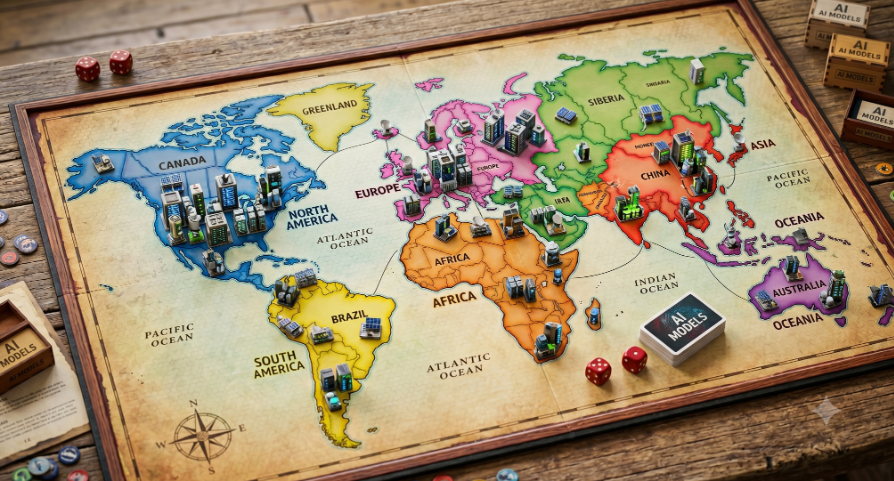
The U.S. government’s directive restricting foreign nationals from accessing Anthropic’s Mythos and Fable 5 models, effectively closing access for customers globally, underscores a structural reality in the evolution of advanced technologies: as frontier AI models demonstrate increasingly powerful dual-use capabilities, particularly in cybersecurity (both offence and defence), it is a natural progression for governments to exercise strict oversight and prioritize national security frameworks.
However, for international governments, enterprises and global economies that rely on these platforms, this shifting regulatory landscape highlights a fundamental structural dependency. When access to core AI infrastructure is subject to compliance with the domestic laws and political winds of a provider’s home country, it creates dependency and uncertainty for sovereign states and international corporations, which can lose access at any time for reasons beyond their control.
This development is likely to accelerate sovereign AI strategies worldwide. The restrictions on Fable 5 demonstrate that advanced AI is increasingly being treated as a strategic national asset rather than a standard cross-border commercial commodity. Consequently, relying entirely on a centralized cluster of U.S.-based developers introduces massive operational risks for foreign entities looking to secure uninterrupted AI capabilities.
To ensure economic resilience and continuous innovation, nations are recognizing the practical necessity of fostering domestic AI technology and ecosystems. True AI sovereignty is evolving from a policy preference into a standard operational requirement for maintaining technological autonomy in a multi-polar world.
This market shift validates the strategic importance of building robust, independent domestic AI capacity that operates outside the ecosystem of traditional tech behemoths. By building customizable, enterprise-grade AI designed for both data security and customer-level governance, Radical Ventures portfolio company Cohere offers a clear blueprint for navigating this new era of Sovereign AI. Cohere’s deployments across Europe, Asia, Canada and around the world prioritize data sovereignty, customer control, and multi-cloud or on-prem flexibility, allowing organizations to run high-performance models entirely within their own geographic and regulatory borders.
The current landscape demonstrates that long-term stability belongs to those who build on independent foundations, ensuring that the critical intelligence powering domestic industries and governments remains aligned with customer oversight and national priorities.
AI News This Week
-
Introducing Oasis 3: First Interactive World Model for Physical AI (Decart)
Radical Ventures portfolio company Decart released Oasis 3, an interactive world model accessible by API and a direct attempt to solve the data bottleneck in physical AI. Oasis 3 generates hyper-realistic, action-conditioned environments from a text prompt and runs in real time, with the company’s DOS optimization stack delivering generation roughly 100x more efficiently than alternatives. Decart is starting with autonomous vehicles and plans to expand into humanoid robots, manufacturing, and other domains where real-world training data is scarce.
-
Cyera, a Cybersecurity Start-Up for the A.I. Era, Raises $600 Million (NYT)
Data security is shifting from a human-threat problem to a machine-threat problem as AI agents take autonomous action across enterprise systems. Cyera was built to secure AI deployments, identifying a company’s most sensitive data and independently restricting access or deleting files when exposure is detected. Radical Ventures participated in Cyera’s latest $600 million Series G round. The company’s annual revenue has more than tripled for three consecutive years, with enterprise customers including AT&T, Bose, and Paramount, each paying north of $1 million annually for the platform.
-
The AI Public Market Floodgates are Opening (FT)
Five years into the generative AI era, financial disclosures rather than narrative are starting to shape how the market evaluates frontier model companies. SpaceX begins trading this week in what is one of the largest IPOs in history, OpenAI has filed to follow Anthropic, and Alphabet is raising $85B in its first equity sale since 2004. Early disclosures already show meaningful dispersion, with Anthropic guiding to its first operating profit this quarter and OpenAI reporting a gross margin of roughly 33%. The coming months of S-1 filings will reshape how both public and private investors benchmark every company in the category.
-
Reka and Moonvalley Join Forces to Advance Models and Infrastructure for Physical AI (Reka)
Radical Ventures portfolio company Reka acquired Moonvalley to accelerate its push into physical AI. The deal brings former DeepMind researchers who were key contributors to models that became Google’s Veo video model, along with a team drawn from Meta, Wayve, Runway, and others. The combined team will focus on building a World Language Action Model (WLAM), trained on egocentric and physical-world data to perceive environments, simulate physics and motion, and translate that understanding into robotic action. The goal is a unified system that lets robots reason about consequences before they act, bridging simulation, perception, and execution in a single model.
-
Research: Superhuman Safe and Agile Racing through Multi-Agent Reinforcement Learning (University of Zurich/Google DeepMind)
Reinforcement learning agents trained entirely in simulation beat a five-time Swiss national drone racing champion in multi-player races at speeds exceeding 22 m/s, while cutting collision rates by 50% compared to single-agent baselines. Through competitive self-play against diverse opponents, the agents developed anticipatory behaviors like blocking, yielding, and accounting for aerodynamic wake without any of those strategies being explicitly programmed. Training took just 27 hours on a single Nvidia RTX 4090 GPU and transferred zero-shot to the real world. The human pilot, when trailing, took increasingly aggressive risks that led to crashes, while the AI agents maintained consistent safety margins regardless of competitive position. The work offers a preview of what well-optimized intelligences can do in physical space, operating safely alongside humans in shared environments.
Radical Reads is edited by Ebin Tomy (Analyst, Radical Ventures)