This week, Radical Ventures announced our lead investment in Generalist AI‘s $400M Series B funding round. Generalist is developing general-purpose foundation models to power the next generation of robotics.
The AI revolution has been a revolution of bits. LLMs and agents are transforming how knowledge work gets done, but knowledge work accounts for less than half of the global economy. Most human labour still happens in the physical world, and the technology to automate it has remained out of reach. General-purpose robotics today sits where language models sat a few years ago, with the field wide open for a new player to emerge as the horizontal intelligence layer for the physical economy.
Generalist’s vision is a hardware-agnostic robot brain capable of powering the full range of robotic form factors and use cases, from industrial assembly to logistics to scientific discovery. In April, Generalist released GEN-1, the first robotic foundation model to cross the threshold of real-world commercial viability, achieving 99%+ reliability across a diverse set of tasks, including kitting auto parts, folding garments, and packing goods. GEN-1 generalizes to new robot embodiments with as little as an hour of post-training data and has begun to demonstrate emergent improvisational behaviours, such as regrasping dropped objects or shaking a bag to seat its contents.
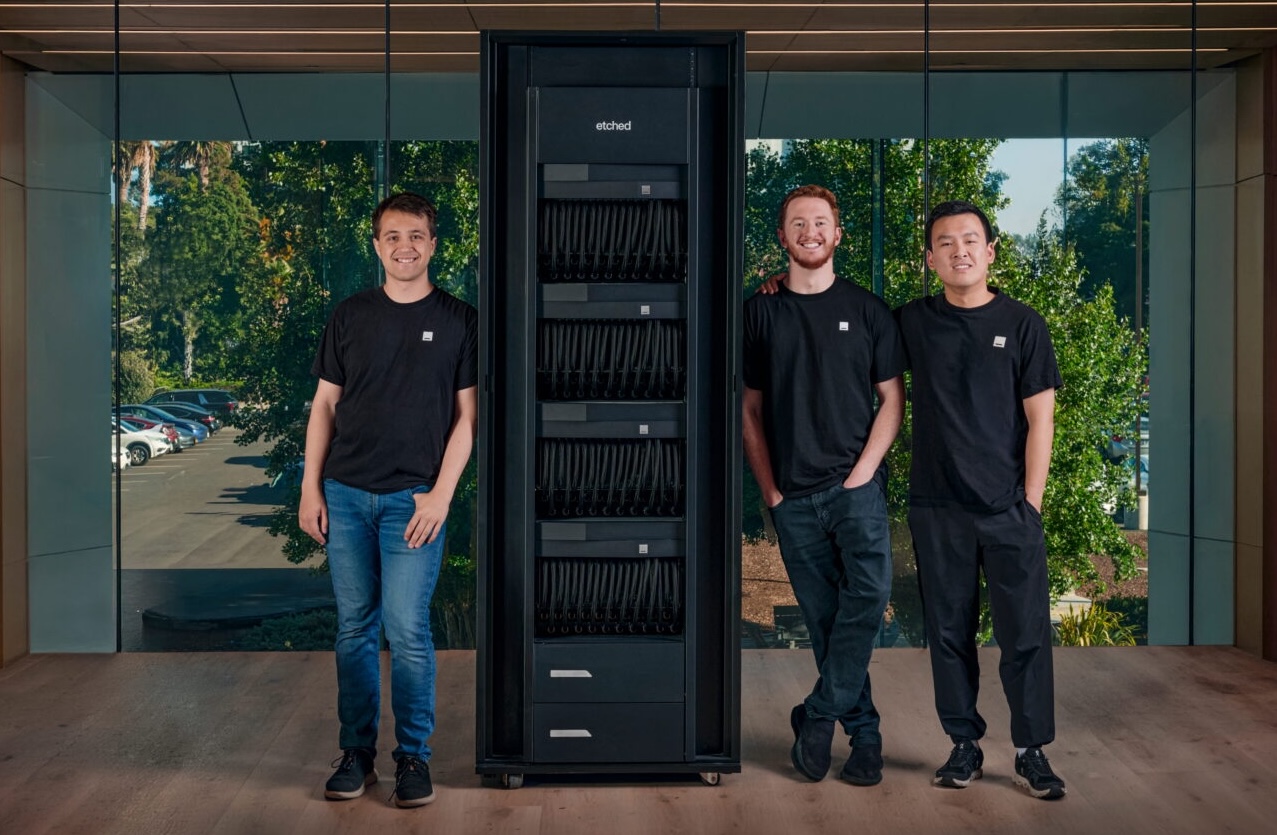
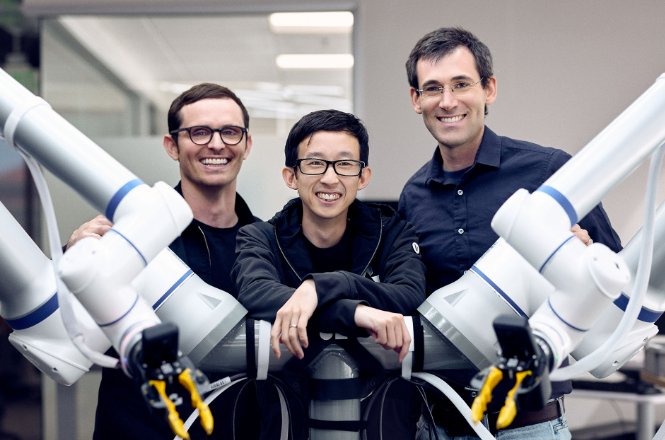
Pete Florence, Andy Zeng, and Andy Barry have assembled one of the strongest robotics teams in the world, drawing senior talent from Google DeepMind, OpenAI, Waymo, Tesla, and Boston Dynamics. Pete and Andy Zeng co-invented vision-language-action models and led foundational embodied AI research at DeepMind. Andy Barry spent five years as a senior roboticist at Boston Dynamics. The team has scaled to roughly 40 people, with zero technical attrition to date.
Robotics will be one of the defining markets of this generation, and quite possibly the largest. We are honoured to partner with the Generalist team as they build the intelligence layer for the physical world.
Read more in Generalist’s announcement and coverage from Bloomberg on the round.
AI News This Week
-
A Functional Taxonomy of World Models (Fei-Fei Li)
Fei-Fei Li, co-founder and CEO of Radical Ventures portfolio company World Labs and Radical Ventures Scientific Partner, argues that “world model” has become AI’s most overloaded term, and proposes a functional taxonomy to clarify it. Referencing the classic agent-world loop in reinforcement learning, she sorts today’s systems by their outputs: “Renderers” produce pixels, “simulators” produce physically faithful states, and ”planners” output actions. Simulation, Fei-Fei argues, is where the hardest problems live and where the real leverage sits. World Labs’ Marble is already dissolving the boundary between these three modalities: “The logical endpoint is a unified world model: one foundation model that can render photorealistic views, produce physically accurate structure, and plan action sequences, switching between output modalities depending on what the downstream consumer needs.”
-
This is Our Time: Canada’s National AI Strategy is an Incredible Step Forward (The Globe and Mail)
Radical Ventures portfolio company Cohere co-founders Aidan Gomez, Nick Frosst, and Ivan Zhang frame Canada’s new national AI strategy as the country’s pivot from research powerhouse to deploying AI at scale. The strategy targets a jump in business AI use from 12% today to over 60% by 2034, projecting 250,000 new AI-related jobs and a 3% lift in GDP worth nearly $200 billion. It commits to expanding sovereign compute, including a world-leading public supercomputer by 2031, and positions Ottawa as an anchor customer through a “Buy Canadian” policy. Cohere, which received roughly $240 million in federal funding in 2025 to build Canadian AI compute infrastructure, is building security-first enterprise AI that is being deployed at a global scale. The authors argue that the policy addresses the missing link of domestic demand, with government procurement and AI literacy investment, including training for one million post-secondary students, poised to dramatically increase commercial uptake of AI in Canada.
-
Donald Trump Signs Watered-Down AI Vetting Order After Maga Infighting (FT)
The White House has signed an executive order creating a voluntary framework for federal review of frontier AI models, with labs asked to submit new releases for security review for up to 30 days before public launch. An earlier draft sought a 90-day window and was pulled amid concerns it would slow US labs. The signing follows internal alarm over Anthropic’s forthcoming Mythos model, which can identify and exploit cyber vulnerabilities. Officials plan to lean on large banks and other industry experts to vet models. One former Trump adviser read the order as the scaffolding for a future model licensing regime.
-
How Good are ‘AI Doctors’ — and Will They Take Over Medicine? (Nature)
Recent studies suggest that advanced language models are starting to match or exceed physicians on narrow diagnostic tasks. OpenAI’s o1 reached correct or near-correct diagnoses in 67% of emergency department cases at a Boston hospital, against 50-55% for the human doctors in the study. Google Research’s AMIE system, which chats with patients via text before their appointments, landed the correct diagnosis among its top three suggestions 75% of the time.
-
AUTOSCIENTISTS: Self-Organizing Agent Teams for Long-Running Scientific Experimentation (Harvard)
Researchers built a system where AI agents work together on scientific research without a central manager, dividing into teams, critiquing each other’s ideas, and regrouping when a line of inquiry runs dry. On a benchmark for optimizing AI training recipes, the system kept finding improvements long after a comparable single-agent system had given up, accepting seven further gains where the baseline accepted none. Applied to predicting how protein mutations affect function, a core problem in drug discovery, the same approach improved the leading method by 6.5% across more than 200 datasets. The work points to AI systems capable of sustaining real scientific exploration over time.
Radical Reads is edited by Ebin Tomy (Analyst, Radical Ventures)